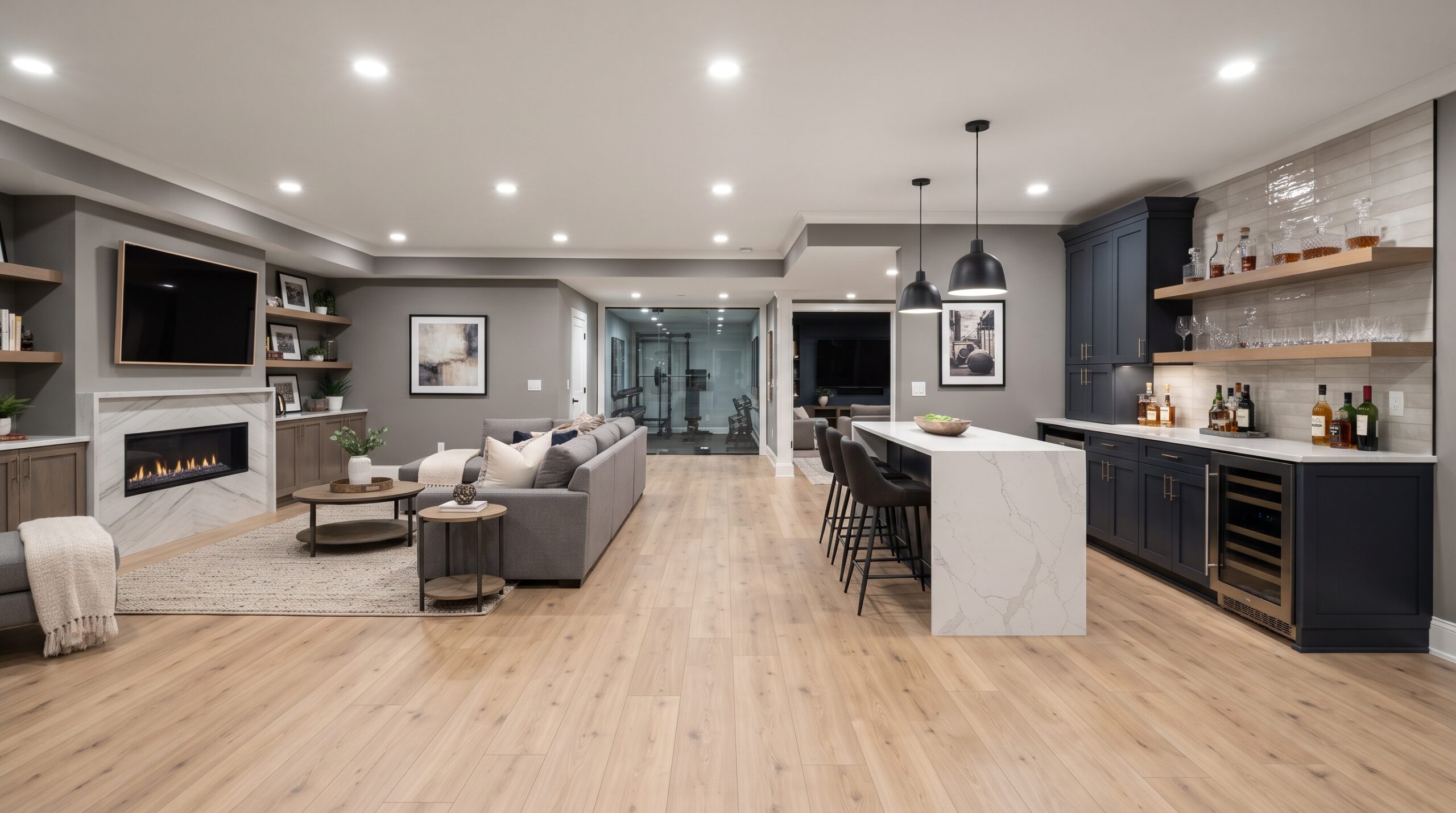
How to Make a Basement Feel Less Like a Basement
How can you make a basement feel less like a basement? The most effective approach combines light-reflective finishes, comfortable materials, intentional lighting, and a layout that supports everyday living. When these elements work together, the lower level feels more like a natural extension of the home while improving usability, long-term appeal, and return on investment.
A basement does not need to imitate an upstairs room in every detail. Instead, the design should address the features that often make lower levels feel enclosed: limited daylight, lower ceilings, cool surfaces, and a lack of visual organization. The following strategies can help create a brighter, more comfortable basement tailored to your lifestyle.
Start with Light Colors to Make the Space Feel Larger
Light wall colors reflect more available daylight and artificial illumination, helping a basement feel more open. Soft white, warm beige, pale gray, and muted greige can create a bright foundation without making the room feel stark or overly cool. Warmer neutrals are often effective below grade because they balance the naturally cooler quality of concrete, masonry, and limited sunlight.
Use the lightest tones on large surfaces, including walls and ceilings, then introduce medium tones through furniture and natural wood accents. Small amounts of deeper color in artwork, pillows, cabinetry, or an accent wall can add definition without visually shrinking the room. This balanced palette creates timeless elegance and gives future furnishings more flexibility, which supports the long-term value of the renovation.
Finish the Ceiling to Improve Height and Visual Continuity
An unfinished ceiling with exposed wiring, ductwork, and framing can immediately make a room feel utilitarian. A smooth painted ceiling creates a more finished appearance, while a bright ceiling color draws the eye upward and improves the sense of height. In some layouts, painting the ceiling and walls in related tones can soften the boundary between them and make the room feel more cohesive.
Where ceiling height is limited, choose finishes that preserve as much vertical space as possible. Simple trim, carefully planned soffits, or painted structural elements can add polish without introducing unnecessary visual weight. Accessible ceiling sections may also be useful where future maintenance access is important, allowing the design to balance a clean appearance with practical ownership.

Select Flooring That Adds Brightness and Comfort
Flooring has a major influence on how a basement looks and feels underfoot. Light oak tones, pale neutrals, and low-contrast patterns can help reflect light and create a seamless visual field. Luxury vinyl plank, tile, engineered wood, and other carefully selected materials can provide durability while supporting a more residential appearance.
Material performance should guide the selection. A basement floor may need to handle seasonal humidity, daily traffic, exercise equipment, children, or occasional spills, so durability and straightforward maintenance are important parts of the design. Soft area rugs can define seating or activity zones, reduce echo, and add warmth underfoot, connecting a practical flooring choice to everyday comfort.
Explore CT Home Remodeling’s flooring services to review options for basement living areas, home offices, family rooms, and other interior spaces.
Layer Lighting to Replace Missing Daylight
A layered lighting plan helps a basement feel active and inviting at any time of day. Ambient lighting, such as recessed fixtures or ceiling-mounted lighting, provides even general illumination. Task lighting from table lamps, floor lamps, or focused fixtures supports reading, working, hobbies, and other activities.
Accent lighting adds depth and helps the room feel designed rather than simply illuminated. Consider wall sconces, picture lights, shelf lighting, under-cabinet fixtures, or soft illumination behind a media wall. Dimmers and separate controls allow the lighting to shift from a brighter daytime setting to a warmer evening atmosphere.
Warm white bulbs can make upholstery, wood, and neutral finishes feel more welcoming, while strategically placed fixtures reduce dark corners. Lighting should also be coordinated with furniture placement so cords are minimized and important areas remain easy to use. Learn more about CT Home Remodeling’s remodeling services and lighting planning.
Use Windows and Daylight as Design Features
Natural light is especially valuable in a basement, so existing windows should remain as visually open as possible. Keep window areas free of bulky furniture and choose light curtains or shades that provide privacy without blocking illumination. Pale trim and nearby reflective surfaces can help distribute daylight farther into the room.
Mirrors placed near or opposite a window can reflect light and create the impression of greater depth. Glass doors, open shelving, and furnishings with lighter profiles can also preserve sightlines between zones. If the basement includes a walk-out area or larger windows, organize the layout around those features so daylight becomes part of the room’s primary experience.
A well-planned window area can improve the mood of the room while making the lower level more attractive to current and future homeowners. The objective is not to create artificial brightness alone, but to make the most of every available source of natural light.
Choose Furniture That Supports Seamless Movement
Furniture should be scaled to the basement’s ceiling height, room dimensions, and intended uses. A streamlined sectional, comfortable chairs, and a properly proportioned coffee table can create a welcoming living area without overcrowding the floor plan. Avoid filling every wall with furniture; preserving open circulation makes the room feel larger and easier to navigate.
Position seating around a focal point such as a media wall, fireplace, window, or conversation area. This arrangement gives the basement the same intentional structure as an upstairs living room. Furniture with exposed legs or lighter upholstery can reduce visual weight, while storage ottomans, console cabinets, and sleeper sofas add flexibility.
Multi-functional furnishings can improve the return on investment by allowing one room to support several activities. A family room can include a compact work area, a guest sleeping option, or organized toy storage without requiring permanent partitions. This makes the finished basement more adaptable as household needs change.

Add Decor That Creates Personality Without Clutter
Decor helps a basement feel intentional and connected to the rest of the home. Large-scale artwork, framed photography, simple wall molding, and coordinated accessories can replace the blank, unfinished feeling often associated with lower levels. Choose a limited palette so the room feels collected rather than crowded.
Vertical shelving and built-ins draw attention upward while providing useful storage. These features can organize books, games, media equipment, and decorative items, keeping surfaces clear and improving everyday efficiency. Concealed storage is particularly valuable in a basement because it helps separate living functions from utility and household storage.
Natural wood tones, woven baskets, textured ceramics, and indoor plants can introduce visual warmth without relying on heavy colors. Decorative materials should support the room’s function, making it more comfortable and attractive while remaining easy to maintain.
Layer Comfortable Materials for a More Residential Feel
Basements often contain hard surfaces that amplify sound and feel cool. Upholstered seating, area rugs, fabric window treatments, throw blankets, and pillows soften the room both visually and acoustically. These materials make a lower level more comfortable for conversation, movie nights, play, or extended family use.
Wood accents can add warmth to a light color palette through shelving, a media wall, furniture, or carefully selected ceiling details. Acoustic panels or fabric treatments may also improve sound quality in entertainment areas without making the space feel overly specialized. Durable, easy-care textiles are a practical choice for high-use rooms because they combine comfort with manageable maintenance.
Choose materials according to the purpose of each zone. Slip-resistant flooring can provide confidence in a basement bathroom or laundry area, while resilient surfaces may be better suited to a gym or playroom. Features such as these connect physical design decisions to lifestyle outcomes, including easier cleaning, better comfort, and peace of mind.

Plan the Whole Basement for Long-Term Value
The strongest results come from coordinating color, ceiling, flooring, lighting, furniture, storage, and decor as one design. Begin by identifying how the basement will be used most often, then organize the layout around circulation, daylight, mechanical areas, and storage needs. This planning process prevents attractive finishes from competing with practical requirements.
A cohesive basement remodel can turn underused square footage into a family room, home office, fitness area, guest space, or flexible combination of uses. Durable materials and optimized layouts support daily comfort while helping the improvement remain appealing over time. Consistent finishes also make the basement feel more connected to the rest of the home.
CT Home Remodeling LLC is based in Andover, Connecticut, and serves homeowners throughout Central and Eastern Connecticut. The company serves communities and counties including Andover, Hartford, Tolland, Windham, Middlesex, New London, and New Haven areas; review the Connecticut service area for more information. Backed by 17 years of remodeling and construction experience. CT Home Remodeling LLC can help you plan a lower level that is comfortable, functional, and built for lasting value.
Frequently Asked Questions
What is the best wall color for a dark basement?
Warm light neutrals, such as soft white, cream, pale beige, or light greige, are practical choices because they reflect available light without creating a cold appearance. Use darker colors selectively for accents, cabinetry, or furnishings.
How can I make a basement ceiling feel higher?
Use a bright, uncluttered ceiling finish and avoid unnecessary visual divisions. Vertical shelving, tall curtains, and floor-to-ceiling built-ins can draw the eye upward, while carefully planned ceiling details add interest without overwhelming the room.
What type of lighting works best in a basement?
A combination of ambient, task, and accent lighting provides the most flexibility. Recessed or ceiling fixtures illuminate the room, lamps support specific activities, and sconces or shelf lighting add depth and warmth.
How do I make a basement floor feel warmer?
Select flooring with a residential appearance and add area rugs in seating or activity zones. Upholstered furniture, layered textiles, and natural wood accents can also make the room feel more comfortable and inviting.
Should basement furniture be low-profile?
Furniture should be appropriately scaled to the room, but it does not need to be extremely low. Streamlined pieces with visible floor space can preserve openness, while comfortable seating and multi-functional storage improve the basement’s everyday usefulness.
Image-Alt Suggestions
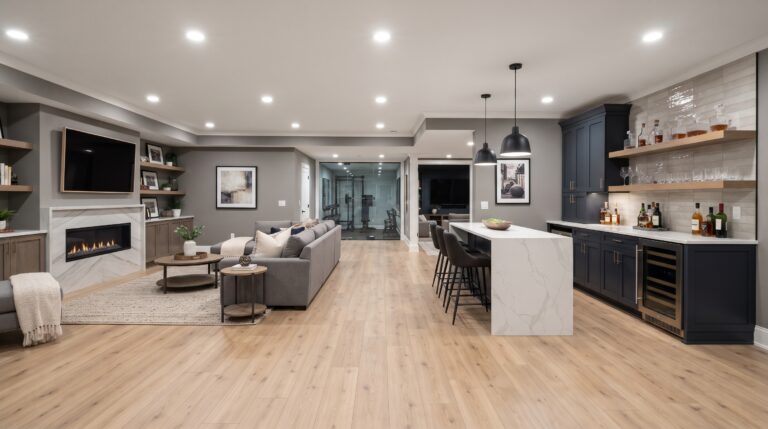
- Bright finished basement with light neutral walls, wood flooring, comfortable seating, and layered recessed lighting.
- Open-concept basement remodel with light luxury vinyl flooring, modern cabinetry, and warm ceiling lighting.
- Basement living room with a contemporary fireplace, integrated storage, neutral furniture, and natural wood accents.
- Finished basement entertainment area with a stone bar, comfortable seating, and ambient accent lighting.
Plan a More Comfortable Basement with CT Home Remodeling LLC
If your basement feels dark, cool, or disconnected from the rest of your home, a thoughtful remodeling plan can improve its comfort and usefulness. Contact CT Home Remodeling LLC to discuss your goals for a finished basement in Andover or throughout Central and Eastern Connecticut. The team brings local experience, honest communication, and a focus on durable craftsmanship designed to serve your household for years to come.