Basement Playroom Ideas for Connecticut Families
SEO Title: Basement Playroom Ideas for Connecticut Families
Meta Description: Learn how to plan a Connecticut basement playroom with durable flooring, smart storage, safe activity zones, layered lighting, and flexible design.
URL Slug: basement-playroom-ideas-connecticut-families
How do I plan a basement playroom? Start with a flexible floor plan that supports active play, creative projects, reading, media, and future uses. The most successful design combines durable materials, organized storage, comfortable lighting, and clearly defined zones while preserving enough open space for children to move freely.
Connecticut basements also require thoughtful material selection because below-grade rooms can feel cool, experience seasonal humidity, and need finishes that are easy to maintain. By planning for everyday performance instead of choosing finishes based only on appearance, you can create a playroom that improves family comfort today and contributes to the long-term usefulness of your home.
Plan the Layout First to Maximize Flexibility
An open layout gives children room to play while allowing the space to change as their interests develop. Begin by measuring the location of stairs, support posts, windows, mechanical equipment, doors, and existing storage so furniture and activity zones can be positioned efficiently. Keeping larger items along the perimeter creates seamless movement through the center of the room.
A playroom may need to support several activities at once, including building toys, crafts, reading, gaming, and family movie nights. Use furniture placement, area rugs, shelving, or ceiling lighting to define zones without installing visual barriers that make the basement feel smaller. This approach improves daily function and preserves the room’s value as a future family room, study area, or teen lounge.
For additional planning ideas, review CT Home Remodeling’s guide to basement remodeling and lower-level design.
Choose Durable Flooring for Comfort and Easy Cleanup
Basement flooring should balance moisture resistance, comfort, impact performance, and simple maintenance. Luxury vinyl plank is a practical option because it can provide a wood-look finish with resistance to scratches and everyday spills when the selected product is appropriate for below-grade use. Its realistic appearance also adds warmth and timeless elegance without requiring delicate upkeep.
Porcelain or ceramic tile can work well in craft areas because it is durable and easy to clean, although a cushioned mat or washable rug can make hard surfaces more comfortable for floor-based play. Rubber flooring offers impact absorption and noise reduction in active zones, while removable foam tiles can provide additional cushioning where children spend the most time. Carpet tiles may add softness to a reading area, with replaceable sections supporting easier long-term maintenance.
The flooring should be selected after evaluating the existing subfloor and moisture conditions. CT Home Remodeling’s flooring services include luxury vinyl plank, tile, carpet, and subfloor preparation, helping homeowners match each material to the room’s intended use.
Create Organized Toy Storage to Keep the Floor Open
Built-in storage makes cleanup easier and protects the playroom’s most valuable feature: open floor space. Low cubbies with labeled bins allow younger children to reach and return toys independently, while closed cabinets can conceal art supplies, games, and items that are used less frequently. Durable finishes and simple hardware help storage withstand repeated daily use.
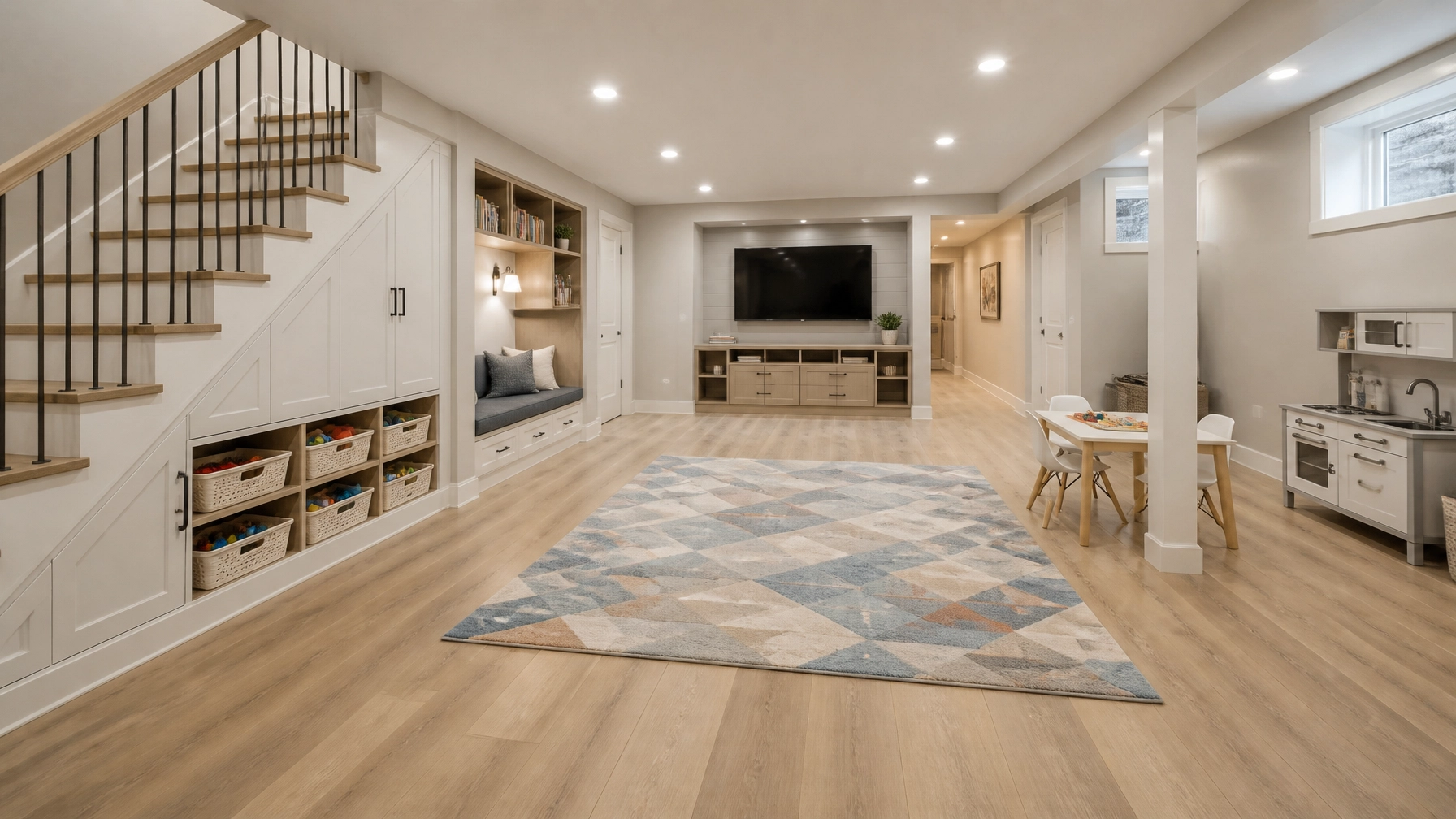
Under-stair storage is especially valuable in a basement because it uses an otherwise difficult area without reducing the main room’s footprint. Deep drawers can hold larger toys, seasonal items, or sports equipment, while wall-mounted book ledges and pegboards use vertical space efficiently. A storage bench can also provide seating for reading or putting on shoes while keeping clutter contained.
Use a combination of open and closed storage rather than relying on one system. Open bins make frequently used toys accessible, while closed doors create a calmer appearance and allow the room to transition more easily when children grow older.

Use Layered Lighting to Improve Visibility and Comfort
Layered lighting makes a basement feel brighter and supports different activities throughout the day. Recessed or low-profile ceiling fixtures can provide even ambient illumination, while task lighting over a craft table or homework desk helps reduce shadows during focused activities. Wall sconces and shelf lighting can add useful illumination to corners without taking up floor space.
Dimmers allow the room to shift from bright active play to a softer setting for reading or movies. Select fixtures that distribute light evenly instead of relying on a single central fixture, especially in a basement with limited natural light. Properly positioned lighting improves visibility around storage, stairs, and activity areas, supporting safer movement and easier cleanup.
Light-colored walls, pale cabinetry, and natural wood accents can also reflect available light and make the space feel more open. These finishes create an inviting backdrop that remains adaptable as furniture, artwork, and décor change.
Define Safe Activity Zones Without Closing In the Room
A zoned layout helps children understand how the room is intended to function while keeping supervision straightforward. Place the active play area in the largest open section, with resilient flooring or a cushioned mat for building, movement, and floor games. Keep storage nearby so toys can be returned without crossing through quieter zones.
Position the craft area on an easy-to-clean surface such as luxury vinyl, tile, or a washable mat. A sturdy table with rounded edges, organized supply storage, and focused task lighting can support drawing, model building, and school projects while limiting mess to one location. The reading area should be farther from high-energy activities, using a rug, comfortable seating, book ledges, and softer lighting to create a natural retreat.
Keep pathways between the stairs, storage, seating, and activity areas clear. Thoughtful circulation reduces tripping concerns, improves supervision, and makes the playroom more comfortable for children and adults.

Add a Media Area Without Letting Screens Dominate
A compact media area can support family movie nights, educational programs, gaming, and shared downtime. Mounting the television on a simple media wall can organize equipment and wiring while keeping the floor available for play. Closed cabinets can store controllers, games, headphones, and other accessories when they are not in use.
Place the media area along one wall rather than in the center of the basement. This arrangement preserves sightlines and allows the room to serve multiple purposes at the same time. Comfortable seating that can be moved or reconfigured provides better long-term value than oversized furniture designed for only one arrangement.
Use dimmable lighting near the media area so screens remain comfortable to view without leaving the rest of the room dark. Acoustic surfaces, curtains, rugs, and upholstered furniture can also help reduce sound transfer and make conversations more comfortable.
Design a Reading Nook That Encourages Quiet Time
A dedicated reading nook gives the playroom a quieter function and helps balance active and restful activities. Use a small bench with concealed storage, a comfortable chair, or floor cushions positioned beside a low bookshelf. Book ledges keep favorite titles visible and accessible while using less space than a deep bookcase.
Natural wood tones, soft textiles, and warm-neutral lighting can make the reading area feel distinct without requiring a separate room. Locate the nook near a window when possible, but provide reliable task lighting for cloudy days and evening use. A durable washable rug adds comfort and helps define the zone.
This space can later become a homework station, music corner, or quiet lounge as children mature. Flexible furnishings make that transition easier and reduce the need for another major renovation.
Select Finishes That Grow With Your Children
A grow-with-you playroom starts with a neutral foundation and uses replaceable accents for personality. Durable flooring, simple cabinetry, adjustable shelving, and timeless wall colors can remain useful through multiple stages of childhood. Colorful rugs, artwork, cushions, and storage bins can change as interests evolve without requiring extensive construction.
Choose furniture that can serve more than one purpose. A craft table can become a homework desk, a low toy cabinet can store books or electronics, and a modular sofa can support movie nights or a future teen gathering area. Casters, foldable tables, and movable seating make the room easier to reconfigure.

Think beyond the current age of your children when planning electrical access, lighting locations, storage capacity, and media placement. A flexible infrastructure reduces future disruption and helps the finished basement remain functional for many years.
Use Connecticut-Appropriate Materials and Maintenance Practices
Connecticut families should select materials that perform well through seasonal changes and regular household use. Moisture-resistant flooring, washable paint, durable trim, and organized storage help protect the finished space from spills, tracked-in debris, and everyday wear. A dehumidifier and routine attention to humidity can also support comfort and help protect furnishings and finishes.
Keep mechanical and utility areas accessible rather than enclosing them behind permanent storage that cannot be moved. Leave room to clean around furniture, inspect storage areas, and replace worn mats or flooring sections when needed. These practical decisions support easier maintenance and help preserve the basement’s long-term return on investment.
Plan a Basement Playroom Around Your Family’s Future
A basement playroom should do more than provide a place for toys; it should add useful, adaptable living space to the home. Durable flooring supports active use, organized storage protects open space, layered lighting improves visibility, and flexible zones allow the room to serve children at different ages. When these features are planned together, the result is more comfortable, easier to maintain, and more attractive to future homeowners.
CT Home Remodeling LLC is based in Andover, Connecticut, and serves homeowners throughout Central and Eastern Connecticut, including Hartford, Tolland, Windham, Middlesex, New London, and New Haven Counties. Backed by 17 years of remodeling and construction experience, the company provides basement renovations, flooring installation, and other services tailored to each home’s layout and lifestyle.
For a thoughtful conversation about planning a basement playroom built for everyday use and long-term flexibility, contact CT Home Remodeling LLC or explore the company’s Connecticut service area.
Frequently Asked Questions About Basement Playrooms
What is the best flooring for a basement playroom?
Luxury vinyl plank, basement-appropriate tile, rubber flooring, and removable foam mats are practical choices. The best option depends on moisture conditions, comfort preferences, cleaning needs, and the activities planned for each zone. Select products according to the manufacturer’s below-grade recommendations.
How can I keep toys organized in a basement playroom?
Combine low cubbies, labeled bins, closed cabinets, wall-mounted shelves, and under-stair storage. Keep frequently used toys within easy reach and place seasonal or bulky items in less accessible storage. This system preserves open floor space and makes cleanup more manageable.
How should a basement playroom be lit?
Use layered lighting with ceiling fixtures for general illumination, task lighting for crafts and homework, and accent lighting for reading or storage areas. Dimmers allow the room to support active play, quiet reading, and media use. Evenly distributed fixtures help reduce dark corners.
How do I make a playroom useful as children grow?
Start with neutral finishes, durable materials, modular furniture, adjustable shelving, and an open layout. A craft table can later become a desk, while toy storage can transition to book or media storage. Removable rugs and accessories allow the room’s style to change without replacing permanent finishes.
Should a basement playroom have separate rooms for each activity?
Not necessarily. Open layouts with defined zones often provide better flexibility and supervision than several small rooms. Use furniture, rugs, lighting, and storage placement to establish activity areas while preserving seamless movement through the basement.
Image-Alt Suggestions
- Bright finished Connecticut basement playroom with open floor space and durable luxury vinyl plank flooring
- Built-in under-stair toy storage with labeled bins and reading bench in a basement playroom
- Flexible basement playroom with active play, craft, reading, and storage zones
- Adaptable basement playroom designed to transition into a teen lounge as children grow