
Choosing Durable Flooring for Connecticut Entryways
What flooring is best for a busy entryway?
Porcelain tile is typically the best choice when an entryway must handle wet footwear, road salt, sand, grit, and frequent cleaning. Luxury vinyl plank is a strong all-around alternative when comfort, warmth, and visual continuity with adjoining rooms are equally important. Laminate and hardwood can create attractive results, but each requires more careful moisture management and maintenance.
Connecticut entryways experience changing conditions throughout the year. Rain, melting snow, damp leaves, sand, and grit can all enter through the front, side, or garage door. The right floor should protect long-term home value by balancing durability, maintenance, safety, appearance, and a seamless connection to the rest of the home.
Porcelain Tile Provides the Strongest Moisture and Grit Protection
Porcelain tile handles moisture, tracked-in grit, and routine cleaning better than the other materials considered here. Its dense surface is well suited to entryways where wet boots, muddy shoes, and road salt are common. A matte or lightly textured finish can also provide a more practical surface underfoot than a highly polished tile.
Maintenance is straightforward: regular sweeping or vacuuming removes abrasive grit, while damp mopping addresses soil and salt residue. The primary maintenance consideration is grout, which may require periodic cleaning to keep the entryway looking consistent. Selecting a coordinated grout color and a well-planned tile layout can reduce the visual impact of everyday debris.
Porcelain tile is available in stone-look, concrete-look, and wood-look designs, making it easier to connect the entry to different adjoining rooms. Large-format tile can create a clean, open appearance, while smaller formats or patterned layouts can define the entry as a purposeful transition zone.

Best fit: Choose porcelain tile when maximum moisture resistance, long-term wear performance, and easy cleanup are the top priorities.
Luxury Vinyl Plank Balances Durability, Comfort, and Design Flow
Luxury vinyl plank offers a practical combination of moisture resistance, scratch resistance, comfort, and realistic wood or stone appearance. Many quality LVP products are designed for wet areas, but product specifications should always be reviewed before installation. Properly installed seams, transitions, and perimeter details are important to maintaining the floor’s performance.
LVP is warmer and softer underfoot than tile, which can make a noticeable difference in a space where family members remove shoes, organize bags, or wait near the door. Its quieter surface can also make movement through the entry feel more comfortable in an open-concept home. Routine care generally includes sweeping and damp mopping without grout cleaning or sealing.
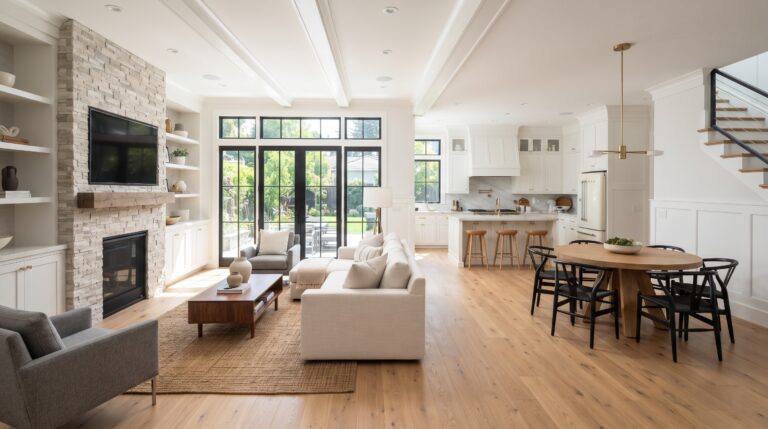
The strongest design advantage is the connection to adjoining rooms. Wood-look LVP can continue from the entry into a hallway, kitchen, or family room, creating seamless movement without introducing a sharp visual break. A similar tone can also be paired with existing hardwood while reserving a more moisture-tolerant surface for the highest-traffic area.
Best fit: Choose LVP when you want a durable entryway with a warmer feel and a cohesive wood-inspired appearance throughout connected living spaces.
Laminate Works Best in a Protected, Relatively Dry Entry
Laminate flooring offers convincing wood and stone visuals with a durable wear surface that can perform well in dry, high-traffic rooms. However, traditional laminate has a moisture-sensitive core, and repeated exposure to wet footwear can lead to swelling or damage at seams. Even products marketed as water-resistant or waterproof should be evaluated carefully for entryway use and installed according to the manufacturer’s recommendations.
Daily maintenance is simple because laminate does not require grout care or refinishing. The limitation is repairability: once a plank is swollen, chipped, or damaged by moisture, it typically must be replaced rather than renewed on site. That replacement risk can reduce the long-term value of laminate in an entry that regularly receives rain, snow, or tracked-in salt.
Laminate can connect attractively to adjoining rooms when the same pattern continues through a hallway or open floor plan. It is most appropriate when the entry is protected by a covered exterior, effective mats, and household habits that limit standing moisture.
Best fit: Consider laminate for a mostly dry entry where scratch resistance and visual continuity matter more than maximum wet-weather protection.
Hardwood Delivers Timeless Elegance but Needs More Protection
Hardwood creates the most authentic wood appearance and can connect naturally with dining rooms, living rooms, stairways, and hallways. Its warmth, grain variation, and ability to be refinished can support long-term design value when the material is maintained properly. Hardwood also allows an entryway to feel like an integrated part of the home rather than a separate utility zone.
Moisture and grit are the main concerns. Wet shoes can leave stains or contribute to finish wear, while sand and small stones may scratch the surface as they are walked across the floor. A durable finish, a harder wood species, substantial indoor and outdoor mats, and prompt cleanup can reduce these risks, but they do not eliminate them.
Engineered hardwood may offer greater dimensional stability than solid hardwood in some applications, yet it still requires careful moisture management. If adjoining rooms already feature hardwood, homeowners may prefer to continue it into the entry for a consistent appearance, accepting that the area will need more attentive maintenance than it would with tile or LVP.

Best fit: Choose hardwood when authentic appearance and room-to-room continuity are the primary goals, and the entry can be protected from prolonged moisture.
A Practical Comparison for Connecticut Entryways
| Flooring material | Moisture performance | Grit and traffic response | Maintenance | Appearance and adjoining-room connection |
|---|---|---|---|---|
| Porcelain tile | Excellent for wet footwear and routine cleaning | Highly resistant to everyday wear; grout is the main care point | Sweep and mop; clean grout as needed | Broad design selection, including wood-look styles; creates a defined transition |
| Luxury vinyl plank | Very good when a suitable product is selected and installed correctly | Resists common scratches and stains; sharp objects can dent or gouge | Sweep and damp mop; no grout or sealing | Realistic wood and stone visuals; supports a continuous appearance |
| Laminate | More limited, especially at seams and edges | Good surface wear performance in dry conditions | Easy routine cleaning; damaged planks require replacement | Effective wood-look continuity in protected areas |
| Hardwood | More vulnerable to wet shoes, salt, and standing moisture | Grit may scratch; dents and finish wear are repairable through maintenance | Prompt cleanup and periodic refinishing | Strongest authentic wood connection and timeless elegance |
Optimize the Entryway Before Selecting the Finish
The surrounding layout affects flooring performance as much as the material itself. A built-in bench, closed storage, boot tray, and designated place for shoes can keep moisture and grit from spreading into adjoining rooms. A durable runner positioned where people naturally pause can capture debris while adding comfort and visual definition.
Transitions should be planned before installation begins. A tile entry can meet hardwood or LVP through a clean threshold or carefully aligned transition, while a continuous floor may create a more open appearance. Matching undertones, such as warm oak with warm beige tile or cool gray with pale ash flooring, helps the change feel intentional rather than accidental.
Subfloor preparation is also essential to long-term performance. Level, stable surfaces support cleaner transitions, reduce movement, and help the finished floor maintain its appearance. For more information about material selection and installation, explore CT Home Remodeling LLC’s flooring services.

Use a Simple Decision Framework
Start by identifying the entryway’s primary exposure. If the space receives wet boots, salt, sand, or frequent pet traffic, porcelain tile or LVP generally offers the strongest balance of performance and maintenance. If the entry remains dry and opens directly into hardwood rooms, hardwood or laminate may be considered for a more continuous visual effect.
Next, evaluate how the space is used. Families who stand near the door to organize backpacks and footwear may prefer LVP’s more forgiving feel, while homeowners who prioritize maximum cleanability may prefer tile. A mudroom-style entry with storage and a boot area can also make a durable material more effective by controlling where moisture and grit collect.
Finally, choose a surface that supports the home’s long-term design direction. Flooring should not only withstand daily activity; it should also make the home more attractive, improve seamless movement, and remain visually relevant as other rooms are updated.

Frequently Asked Questions About Entryway Flooring
Is tile or luxury vinyl better for a busy entryway?
Tile is usually the stronger choice for maximum moisture and grit resistance. LVP may be better when comfort, quieter movement, and continuity with adjoining wood floors are more important. Both can support a durable, low-maintenance entryway when the product and installation are appropriate for the space.
Can hardwood be used in a Connecticut entryway?
Yes, hardwood can work when moisture is controlled with exterior and interior mats, prompt cleanup, and a durable finish. It remains more vulnerable to wet footwear and abrasive grit than porcelain tile or LVP. The decision is best based on how the entry connects to the rest of the home and how much maintenance the household is prepared to provide.
Is laminate a good choice for an entryway with wet shoes?
Laminate is generally less suitable when wet shoes and melting snow are frequent concerns. Its surface may resist everyday wear, but moisture can affect seams and the core. If laminate is being considered, select a product specifically intended for the anticipated conditions and protect the area with effective mats.
What flooring looks best next to existing hardwood?
Wood-look LVP can provide a practical visual connection while offering greater moisture tolerance near the door. Hardwood can create the most seamless material match, but it requires more protection and maintenance. Wood-look porcelain tile is another option when durability is more important than using the same material throughout.
What features make an entryway floor easier to maintain?
A low-variation pattern can help disguise everyday grit, while a matte or lightly textured surface may be more practical than a highly polished finish. Large mats, a boot tray, accessible storage, and a defined shoe-removal area all reduce the amount of moisture and debris that reaches the floor. Regular sweeping is especially important because grit can act as an abrasive on many floor types.
Plan a More Durable Connecticut Entryway
CT Home Remodeling LLC is based in Andover, Connecticut, and serves homeowners throughout Central and Eastern Connecticut, including Hartford, Tolland, Windham, Middlesex, New London, and New Haven Counties. Backed by 17 years of remodeling and construction experience. Our team can help you evaluate flooring, transitions, storage, and related mudroom remodeling planning as part of a larger interior renovation.
Whether you are updating an entryway, coordinating floors throughout the main level, or creating a more functional mudroom area, begin with a clear conversation about your home, lifestyle, and long-term goals. Explore the Connecticut areas we serve or contact CT Home Remodeling LLC to discuss a durable flooring plan with an experienced local remodeling team.