Bathroom Lighting Ideas for Connecticut Homes
SEO title: Bathroom Lighting Ideas for Connecticut Homes | CT Home Remodeling LLC
Meta description: Learn how to choose bathroom lighting for comfortable daily use, including vanity, shower, ambient, accent, dimming, color temperature, and placement.
URL slug: bathroom-lighting-ideas-connecticut-homes
How can you choose the right lighting for a bathroom? The most effective approach is to combine several lighting layers rather than rely on one ceiling fixture. Vanity lighting supports grooming, shower lighting improves visibility, ambient fixtures create balanced general illumination, and accent lighting adds a softer evening setting.
A thoughtful lighting plan also improves the long-term function of a bathroom. Proper placement reduces shadows, dimmers make the room more adaptable, and efficient LED fixtures can support everyday use while making your home more attractive to future buyers.
Start With a Layered Lighting Plan for Better Function
Layered lighting divides the bathroom into practical zones. Ambient lighting brightens the overall room, task lighting focuses on areas such as the vanity, and accent lighting highlights architectural or decorative features. Combining these layers creates seamless movement from morning routines to evening relaxation.
Natural light should also influence the plan. A bathroom with a window may need less daytime illumination near the vanity, while a darker interior bathroom may benefit from brighter, evenly distributed fixtures. In Connecticut homes, where winter days can be short and overcast, adjustable lighting helps maintain comfort throughout the year.
A complete bathroom remodeling plan can coordinate lighting with the vanity, mirror, shower, flooring, storage, and ventilation. This approach makes each feature work together instead of treating lighting as a last-minute decorative choice.
Position Vanity Lighting to Reduce Shadows
Vanity lighting has the greatest effect on daily comfort because it supports shaving, applying makeup, styling hair, and other close-up tasks. A single fixture above the mirror can cast shadows beneath the eyes, nose, and chin. Fixtures placed on both sides of the mirror provide more balanced illumination across the face.
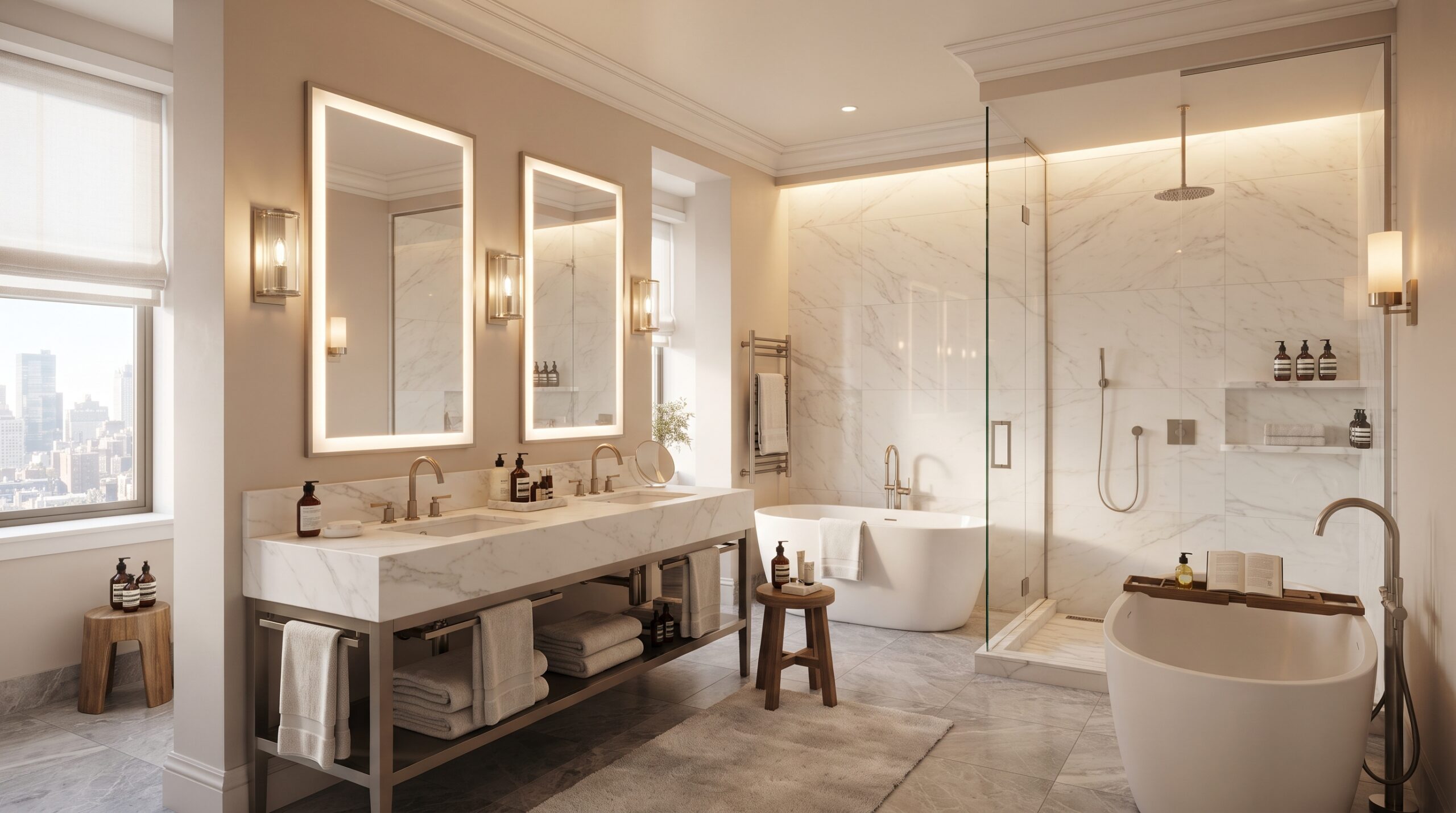
Wall sconces positioned near eye level are an effective option for many bathroom layouts. For a typical adult user, the center of each sconce may be placed approximately 60 to 65 inches above the finished floor, then adjusted for the household’s height and the mirror design. The goal is even cross-lighting rather than a fixed measurement.
A wide vanity light above the mirror can work well when side-wall space is limited. Choose a fixture that spans a substantial portion of the mirror and uses a frosted or opal diffuser to soften glare. For a double vanity, separate sconces or a long, evenly illuminated fixture can support both users without creating dark areas between sinks.

Choose High-Quality Light for Accurate Grooming
The fixture’s color quality matters as much as its design. LEDs with a high color-rendering index, commonly identified by a CRI of 90 or higher, help skin tones, tile colors, cabinetry, and clothing appear more natural. This is especially useful when selecting makeup, coordinating outfits, or evaluating the finish of a bathroom remodel.
Warm white light in the 2700K to 3000K range generally creates a comfortable, flattering appearance. A consistent color temperature across the vanity, ceiling, and shower prevents the room from feeling visually disconnected. Homeowners who prefer a crisper morning environment may choose adjustable fixtures that shift between warmer evening light and cooler daytime light.
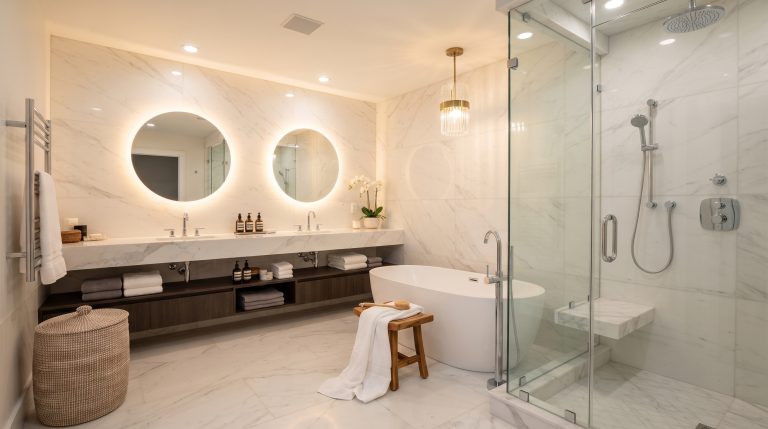
Backlit or front-lit mirrors can combine task lighting with a clean, contemporary appearance. Select a mirror with illumination directed toward the user when grooming is the priority. Decorative backlighting can provide attractive depth, but it should supplement: not replace: front-facing vanity light.
Use Shower Lighting to Improve Visibility
Shower lighting should illuminate the floor, walls, controls, and storage areas without producing harsh glare on wet surfaces. A recessed fixture designed for shower environments can provide focused illumination above the shower area. Larger showers may require more than one fixture to prevent dim corners near benches, niches, or opposite walls.
Placement should follow the actual shower layout rather than simply centering the fixture in the room. A light aligned with the shower controls can improve visibility when adjusting water temperature, while a second fixture may better illuminate a longer walk-in shower. Coordinating shower lighting with tile color and glass placement also helps preserve a bright, open appearance.
A recessed niche with integrated lighting can make toiletries easier to locate while emphasizing the texture and pattern of the tile. Keep decorative lighting subtle in wet areas so the feature supports usability rather than distracting from it.

Install Ambient Fixtures for Balanced Illumination
Ambient lighting fills the room and supports everyday activities such as cleaning, organizing, and moving between the vanity, shower, and storage areas. Recessed lights offer a streamlined appearance, while flush-mount or semi-flush fixtures can suit smaller bathrooms and rooms with lower ceilings.
The objective is even coverage from wall to wall. Avoid placing a single ceiling light directly over the user’s head at the vanity, where it may create unflattering shadows. Instead, use the ceiling fixture to support the vanity lighting and brighten circulation areas.
A neutral, moisture-resistant finish can help the fixture coordinate with hardware, faucets, mirrors, and cabinet details. Selecting a style that remains compatible with future updates can also improve the bathroom’s long-term visual consistency and reduce the need for frequent replacements.
Add Accent Lighting for Comfort After Dark
Accent lighting creates a lower, softer level of illumination for nighttime use. Under-vanity LED strips can provide a gentle path of light without activating every fixture in the room. This supports comfortable movement while preserving a calmer environment during early mornings or late evenings.
Cove lighting, illuminated niches, and softly lit shelving can emphasize architectural details and add depth to a neutral bathroom palette. These fixtures should remain secondary to task and ambient lighting during normal routines. Their primary value is flexibility: they let the bathroom transition from a bright work space to a more relaxed setting.
Motion-activated under-vanity lighting may be useful in a shared or frequently used bathroom. A low-level setting can provide visibility without the abrupt brightness of a full ceiling fixture, contributing to peace of mind during nighttime movement.

Use Dimmers to Match the Lighting to the Routine
Dimmers provide one of the most practical improvements in a bathroom lighting plan. Bright light may be helpful for cleaning or detailed grooming, while a lower setting is more comfortable when preparing for bed. Separate controls give each lighting layer a clear purpose and prevent the entire room from turning on at full brightness.
Consider placing ambient, vanity, shower, and accent lighting on separate switches or dimmers. This allows you to create different scenes without changing the fixtures themselves:
- Morning routine: Brighter vanity lighting supported by moderate ambient light.
- Evening routine: Lower vanity and ambient levels with accent lighting enabled.
- Nighttime visit: Under-vanity or other low-level lighting only.
- Cleaning: Full, evenly distributed illumination throughout the room.
A remodeler can coordinate control locations with the bathroom’s circulation pattern, door swing, vanity placement, and shower entry. This planning improves convenience and helps the lighting system remain useful as household needs change.
Coordinate Lighting With Materials and Layout
Light reflects from every surface in the room, so material selection affects the final result. Glossy tile and polished countertops can reflect more light, while matte finishes absorb it and may require additional illumination. White and light-gray surfaces help distribute light, while darker cabinetry may benefit from dedicated task or accent fixtures.
Mirrors should be selected with both proportion and lighting in mind. An oversized mirror may require a wider fixture or additional side lighting, while a medicine cabinet with integrated illumination can combine storage and task functionality. Coordinating the mirror, vanity, sconces, and electrical layout early helps avoid visual clutter and supports an optimized layout.
Slip-resistant flooring, accessible storage, and clear shower visibility work together with the lighting plan to improve daily safety and ease of use. Each physical feature should support a lifestyle outcome, from confident movement to simpler morning routines.
Plan Bathroom Lighting as Part of the Remodel
Lighting is most effective when planned before walls, tile, cabinetry, and mirrors are finalized. During the design stage, identify where grooming occurs, how the shower is used, whether natural light changes during the day, and which areas need low-level illumination at night.
A professional lighting and fixture update can be coordinated with vanity installation, tile work, shower construction, and storage improvements. This integrated process helps preserve clean sightlines and ensures that fixtures support the room’s proportions rather than compete with them.
CT Home Remodeling LLC is based in Andover, Connecticut, and serves Central and Eastern Connecticut, including Hartford, Tolland, Windham, Middlesex, New London, and New Haven Counties. Homeowners can review the company’s Connecticut service areas to learn more about regional coverage.
Frequently Asked Questions About Bathroom Lighting
What is the best lighting for a bathroom vanity?
The best vanity lighting provides even illumination from both sides of the mirror or from a wide, diffused fixture above it. High-color-quality LEDs in a comfortable warm-white range can make grooming tasks easier while keeping skin tones natural.
Should bathroom lights be warm or cool?
Warm white lighting between 2700K and 3000K is comfortable for most bathroom applications and complements many tile, wood, and stone finishes. Adjustable fixtures can provide warmer evening light and a cooler setting when brighter daytime visibility is preferred.
Do I need separate lights for the shower?
A dedicated shower fixture can improve visibility, particularly in a walk-in shower, a shower with a bench, or a space with darker tile. The fixture should be selected for the shower environment and coordinated with the layout so it illuminates the areas where light is most needed.
Are dimmers useful in a bathroom?
Yes. Dimmers let homeowners adjust brightness for grooming, cleaning, relaxing, and nighttime movement. Separate controls for ambient, vanity, shower, and accent lighting provide greater flexibility than one switch controlling every fixture.
How can bathroom lighting support resale value?
A well-planned lighting system improves the bathroom’s function, appearance, and adaptability. Balanced vanity illumination, attractive fixtures, efficient LEDs, and flexible controls can make the space more appealing while supporting the long-term value of the renovation.
Make Your Bathroom More Comfortable With a Thoughtful Lighting Plan
The right bathroom lighting combines task, ambient, shower, and accent fixtures with suitable color temperature, careful placement, and flexible controls. Planning these elements with the vanity, tile, storage, and shower layout creates a cohesive space tailored to your lifestyle and designed for long-term usability.
CT Home Remodeling LLC is based in Andover, Connecticut, and serves homeowners throughout Central and Eastern Connecticut. Backed by 17 years of remodeling and construction experience. To discuss a bathroom lighting or renovation plan, contact CT Home Remodeling LLC for a practical conversation about your goals.
Image-alt Suggestions
- Bright Connecticut bathroom with layered ambient, vanity, and shower lighting.
- Double bathroom vanity with side sconces, backlit mirrors, and natural wood cabinetry.
- Walk-in shower with recessed lighting, gray tile, glass enclosure, and storage niche.
- Modern bathroom with wood vanity, warm brass fixtures, stone tile, and soft accent lighting.