How to Keep a Basement Dry and Comfortable in Connecticut
Connecticut basements can become damp, chilly, or musty because of seasonal rain, snowmelt, cool foundation walls, and summer humidity. The best way to keep a basement dry and comfortable is to manage moisture in the correct order: move water away from the foundation, control indoor humidity, improve insulation, and choose finishes that tolerate below-grade conditions.
This approach protects your remodeling investment while creating a lower level that feels like a natural extension of the home. Whether you are planning a family room, home office, gym, guest area, or entertainment space, each design decision should support durability, comfort, easy maintenance, and long-term value.
Control Exterior Water First to Protect the Foundation
Gutters and downspouts are the first line of defense against basement moisture. Clean gutters help prevent roof water from overflowing beside the foundation, while properly positioned downspouts direct runoff away from the house instead of concentrating it near basement walls.
Ground grading also affects how much water reaches the foundation. Soil and hardscape surfaces should encourage water to move away from the house rather than collect along the perimeter. Addressing low spots, compacted soil, or areas where water regularly pools can reduce moisture pressure before it reaches the basement.
Connecticut homeowners should pay particular attention after heavy rainfall, spring snowmelt, and periods of repeated storms. Checking gutters, downspouts, window wells, and visible drainage paths as part of seasonal home maintenance can identify problems before they affect insulation, flooring, stored belongings, or finished walls.
Manage Basement Moisture Before Adding Finishes
A dry-looking basement is not always a dry basement. Musty odors, white mineral deposits on masonry, damp corners, condensation on pipes, stained walls, and recurring puddles can all indicate that moisture management needs to come before painting or finishing.
A dehumidifier can improve air quality and comfort, but it cannot solve active water entry through foundation walls or floors. Liquid water should be addressed at its source, followed by adequate drying and improved air circulation. Finishing over damp materials can shorten the life of drywall, flooring, trim, cabinetry, and furnishings.
The U.S. Environmental Protection Agency recommends keeping indoor relative humidity below 60%, with a general ideal range of 30% to 50%. A digital hygrometer can provide a practical way to monitor basement conditions in different seasons and determine whether humidity control is working consistently.

Use a Properly Positioned Dehumidifier for Consistent Comfort
A dehumidifier is one of the most effective tools for managing Connecticut’s humid summer air. Select a unit suited to the basement’s size and operating conditions, then place it where air can circulate freely around the intake and exhaust.
An automatic drainage option can make ongoing maintenance easier than relying on a collection bucket. Depending on the basement layout, the unit may drain toward a floor drain, sump area, or another suitable outlet. Keeping the drainage path clear helps the appliance operate reliably and prevents the reservoir from becoming an additional source of moisture.
A dehumidifier works best as part of a larger moisture-control plan. Keep interior doors open when appropriate, avoid blocking airflow with storage, and maintain heating and cooling equipment so the basement receives more consistent air movement. This combination supports a drier environment, reduces musty odors, and makes the space more comfortable for everyday use.
Choose Insulation That Improves Warmth Without Trapping Moisture
Insulation can make a basement feel warmer and less clammy by raising the temperature of cold foundation surfaces. Warmer walls reduce the chance that humid indoor air will condense against masonry, which supports better comfort and helps protect the finished wall system.
Moisture conditions should be controlled before insulation is installed. In cold, humid climates such as Connecticut, rigid foam or closed-cell spray foam may be considered as part of a carefully designed wall assembly because these materials can provide thermal insulation and air control near the foundation.
The placement and sealing of insulation matter as much as the product itself. Gaps, unsealed seams, and poorly handled penetrations can allow warm, moist air to reach cold surfaces. A remodeling plan should also account for rim joists, utility areas, pipes, and mechanical equipment so the finished space remains accessible and performs consistently.
The Department of Energy’s basement insulation guidance emphasizes controlling bulk water and humidity before insulating below-grade walls. This sequencing helps protect the long-term performance of the remodel and reduces the likelihood of having to remove finished materials later.
Select Basement Flooring for Durability and Easy Maintenance
Basement flooring should balance appearance, comfort, moisture tolerance, and future maintenance. Luxury vinyl, porcelain tile, sealed concrete, and other basement-appropriate surfaces can provide a durable foundation for living areas, offices, gyms, and entertainment rooms.
Luxury vinyl is often useful where homeowners want the visual warmth of wood with a surface that is simple to clean and more resistant to everyday moisture. Porcelain tile can support entry areas, bathrooms, laundry zones, and other locations where water resistance and easy maintenance are priorities. Rubber flooring may be suitable for exercise or play areas because it provides resilience underfoot.
Carpet requires more careful consideration on a concrete slab because it can hold moisture and become difficult to dry. Removable area rugs can add warmth while remaining easier to clean or move when necessary. Choosing the right flooring connects directly to lifestyle benefits: simpler upkeep, greater peace of mind, and a finish that remains attractive under regular use.
For professional material guidance, explore CT Home Remodeling LLC’s flooring services.
Use Moisture-Conscious Wall and Ceiling Finishes
Wall finishes should be selected with the basement’s moisture conditions in mind. Moisture-resistant wall products, well-sealed surfaces, washable paint, and carefully detailed transitions can help protect the finished appearance while making routine cleaning easier.
Ceiling design also affects comfort and maintenance. A smooth finished ceiling creates a polished, continuous look, while an accessible ceiling system may make future service around utilities more convenient. The best choice depends on the layout, the location of mechanical systems, and the homeowner’s preference for visual continuity or access.
Neutral paint colors, bright lighting, and warm wood accents can make a lower level feel more open without relying on fragile materials. These design choices contribute to timeless elegance while supporting long-term adaptability. A basement that can function as a family room today and a home office or guest area later offers stronger practical value.

Plan the Layout Around Comfort, Flow, and Long-Term Value
An optimized layout can make a basement feel larger and more useful without adding square footage. Start by identifying the primary purpose of the space, then arrange furniture, storage, lighting, and circulation around that use.
A family room may benefit from an open seating arrangement, built-in storage, and a media wall. A home gym needs resilient flooring, equipment clearance, and ventilation. A guest area may require privacy, closet storage, and convenient access to a bathroom. Defining zones with furniture, lighting, partial walls, or ceiling details preserves seamless movement while allowing the basement to serve multiple functions.
Keep moisture-sensitive items elevated from the floor and avoid placing built-ins where they could conceal important water-management equipment. Accessible utility areas and well-planned storage protect the finished appearance while making maintenance more practical. These details increase everyday usability and can make the home more attractive to future buyers.

Work With a Remodeling Plan Tailored to Connecticut Homes
Keeping a basement dry and comfortable requires coordination between exterior drainage, moisture management, humidity control, insulation, flooring, lighting, and room design. Treating these elements as one system produces a more reliable result than choosing finishes separately.
CT Home Remodeling LLC is based in Andover, Connecticut, and serves homeowners throughout Central and Eastern Connecticut. Backed by 17 years of remodeling and construction experience, the company provides basement renovations and broader home remodeling services with an emphasis on honest communication, practical planning, and quality craftsmanship.
Learn more about basement renovations or explore CT Home Remodeling LLC’s home remodeling services. Homeowners in Hartford, Tolland, Windham, Middlesex, New London, and New Haven Counties can also visit the company’s Connecticut service-area page. When you are ready to discuss a lower level designed for lasting comfort and usefulness, contact CT Home Remodeling LLC to begin a thoughtful conversation.
Frequently Asked Questions About Dry, Comfortable Basements
What is the most important step for keeping a basement dry?
Exterior water management is an important starting point. Clean gutters, functional downspouts, and grading that moves water away from the foundation can reduce the amount of moisture reaching basement walls and floors. Interior humidity control and moisture-conscious finishes should follow source management.
Can a dehumidifier solve a damp basement?
A dehumidifier can reduce humidity and improve comfort, but it cannot correct active water seepage, poor grading, or overflowing gutters. Use it as part of a broader moisture-management plan and monitor relative humidity with a hygrometer.
What insulation is appropriate for a Connecticut basement?
Rigid foam and closed-cell spray foam are commonly considered for cold-climate basement assemblies because they can improve thermal performance and help limit air movement near foundation walls. The insulation system should be selected and detailed based on the basement’s existing moisture conditions.
What flooring is best for a basement?
Luxury vinyl, porcelain tile, sealed concrete, and rubber flooring are practical options for many basement applications. The best choice depends on the room’s purpose, the moisture environment, comfort preferences, and the level of maintenance the homeowner wants.
Should carpet be used in a basement?
Carpet can be more difficult to maintain if moisture reaches the concrete slab. Removable area rugs over a durable hard-surface floor can provide warmth and comfort while remaining easier to clean, dry, or replace.
SEO Details
- SEO title: How to Keep a Basement Dry and Comfortable in Connecticut
- Meta description: Learn how to keep a Connecticut basement dry and comfortable with better gutters, grading, dehumidifiers, insulation, flooring, and moisture-conscious finishing choices.
- URL slug:
keep-basement-dry-comfortable-connecticut
Image-Alt Suggestions
- Bright finished Connecticut basement with lounge seating, a kitchenette, recessed lighting, and light wood flooring.
- Basement entertainment room with a home theater, stone bar, comfortable seating, and durable flooring.
- Before-and-after basement renovation showing an unfinished lower level transformed into a bright living space.
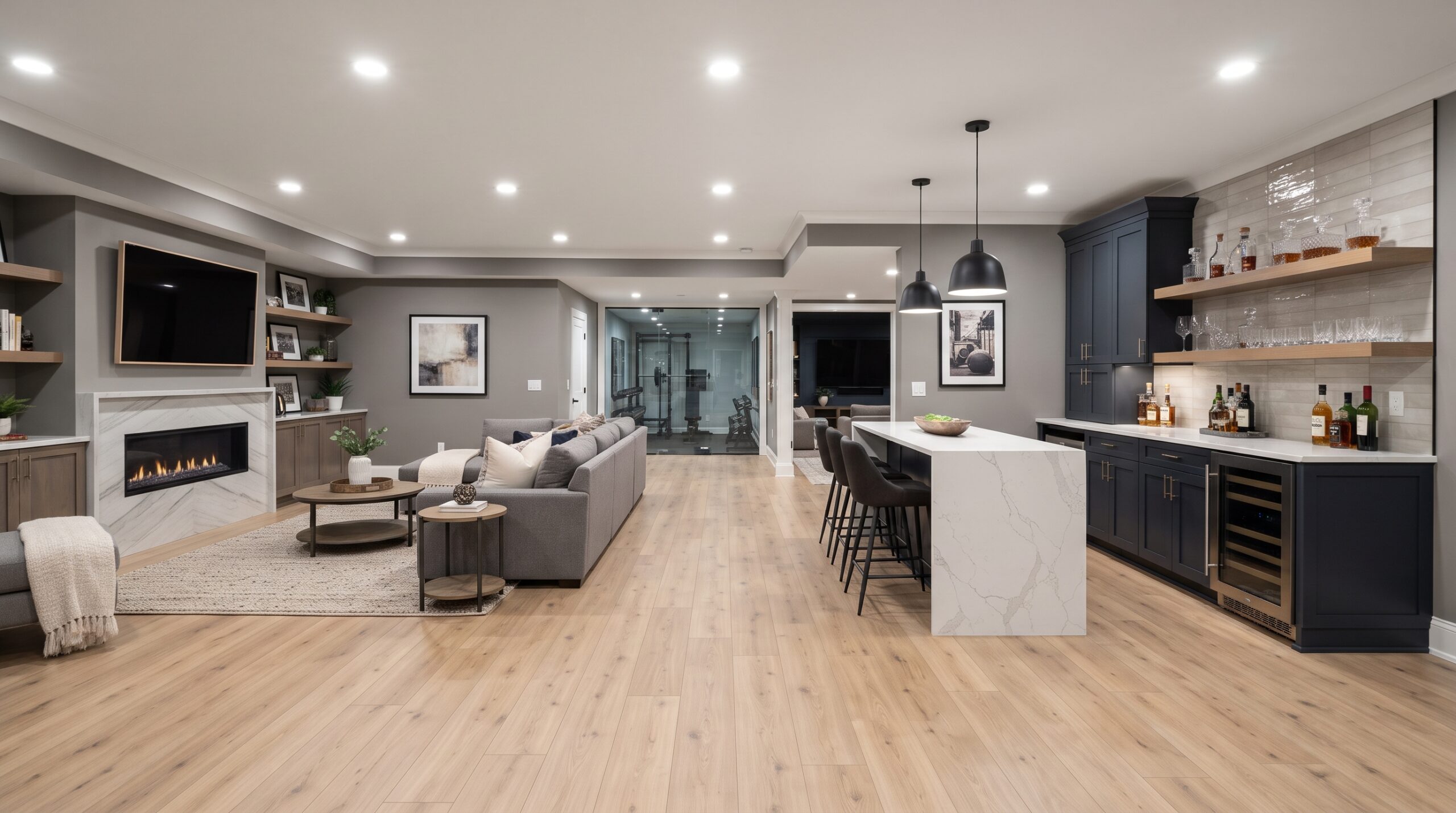
- Finished basement with a wet bar, fireplace, built-in storage, and an open layout for comfortable everyday use.